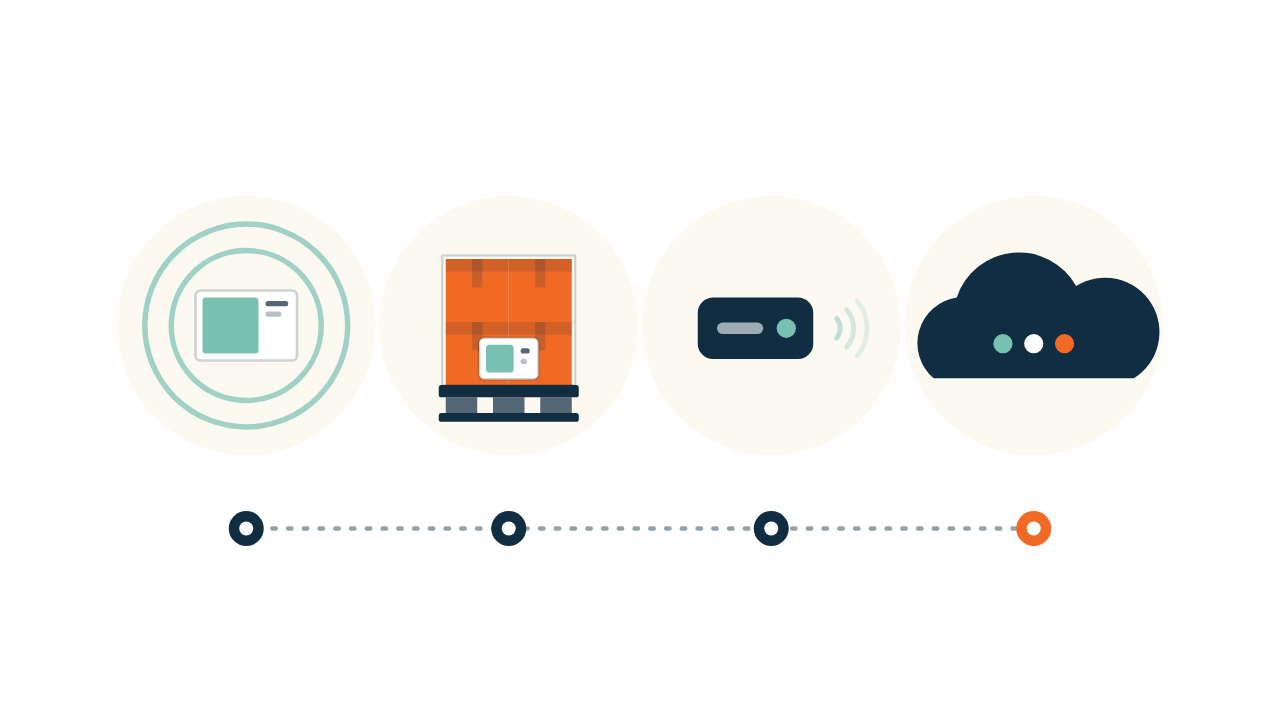
Supply chain visibility... What's what and what's best?

RTTV, SCIOTV, VAAS, AIOT...
Please pardon my usage of abbreviations, I know it's a No-No. I just want to make a point.
The world of Supply Chain Visibility might be confusing even for us Supply Chain People
As a parent of competitive swimmer, I do a lot of super-early morning drives. It's a pleasure to drive on empty, well-lit highways and roads. It is a pleasure to operate well-lit supply chains.
Today we have all the necessary tools to light up our supply chains.
We talk about end-to-end and real time visibility. Just as on the road, extra light comes at extra cost. It is our responsibility to choose just the right level of light to do our jobs well.
What visibility mode is most suitable and for what business environment? Let's take a closer look...
| Mode | How it works | Best fit |
|---|---|---|
| Real-time transportation visibility (RTTV) | Tracks shipments through the GPS of the vehicles carrying them | Large shippers moving many containers or trailers of non-perishable goods |
| Supply chain IoT visibility (SCIOTV) | Sensors on the shipment report location and conditions | Perishable, high-value or high-demand goods |
| Visibility-as-a-Service (VaaS) | Sensors arrive with instructions, travel with the shipment and come back | Fast visibility for important shipments without capital investment |
| Ambient IoT (AIoT) | Low-cost printed stickers read by surrounding infrastructure | Emerging, large-scale programs with heavy infrastructure |
Real-time transportation visibility (RTTV)
RTTV tracks shipments by association with transport vehicles (trucks, trains, ships, planes).
Timely, accurate information on shipment location helps to optimize routes, identify and report delays in ports and at the loading docks. Through timely information RTTV improves customer satisfaction and operational efficiency.
Predictive ETA is a powerful feature of RTTV solutions. It positively affects inventory management, it helps manage supply chain risks and facilitates informed, proactive decision making with real-time data on potential disruptions (traffic, weather, labor events).
Since RTTV is reliant on GPS signal from multiple vehicles, it requires significant upfront integration effort and takes a few months to implement.
The reported cost of deploying RTTV solutions varies significantly depending on the scale and complexity of the implementation. On average, companies invest between $100,000 to $500,000, which cover multi-party integration efforts and the software platform.
Once the solution is operational, maintenance and software updates can run around $10,000 to $50,000 annually.
Due to significant initial investment and on-going support fees RTTV solutions are usually deployed by large global organizations which can achieve economies of scale. Users report significant cost saving.
RTTV solutions contribute greatly to operational efficiency and significantly reduce cost by optimizing transportation routes, reducing fuel consumption, identifying and minimizing delays.
Reduced demurrage and detention charges are the main contributors to cost savings and ROI associated with RTTV solutions. Automated shipment location updates save time by reducing unnecessary communications.
Improved visibility leads to better communication with customers and higher satisfaction rates, which can translate to increased sales and customer loyalty.
Real-time alerts for delays or issues allow companies to take proactive measures, reducing costs associated with expedited shipping and rush orders.
Industry reports an ROI of 10-20% within the first year. A word of caution, I found the ROI numbers shared here in the web publications provided by RTTV Vendors. Some bias might be included.
Supply chain IoT visibility (SCIOTV)
IoT sensors attached to shipments give them reporting ability - geolocation, environmental and mechanical conditions are now streamed to interested stakeholders directly from the shipment in real time and in a proactive manner.
Enhanced visibility delivered by IoT devices leads to better decision-making and reduced risks.
By continuously monitoring and registering the environmental or mechanical factors (temperature, humidity, atmospheric pressure, shock, tilt, acceleration) IoT Visibility creates a Digital Shipment Passport important for sensitive freight (agri-food, grocery, pharma & healthcare, sensitive electronic devices).
For high value or high demand goods IoT Visibility enhances shipment security by notifying stakeholders in real-time of unauthorized access to monitored goods.
When organizations build IoT Visibility solutions from scratch by acquiring IoT sensor systems and integrating them with corporate IT infrastructure through IoT integration platforms, the project can take from several months to a year plus and involve significant amount of IT resources.
Implementing IoT visibility solutions typically costs from $200,000 to $1,000,000 depending on the scale. This includes the cost of IoT devices (sensors, gateways), software platforms, and integration. Hardware costs can range from $100,000 to $500,000, while software and integration can add another $100,000 to $500,000.
Ongoing costs for maintenance, software updates, and data management can be around $20,000 to $100,000 annually.
IoT visibility delivers timely insights allowing informed action to resolve issues before they become major problems, significantly improving operational efficiency and resource utilization.
Environmental monitoring of perishable freight dramatically reduces waste and improves profitability.
Accurate delivery performance and minimized production disruptions improve customer satisfaction, bring repeat business, positively affect corporate reputation.
Industry reports an ROI of 15-25% within the first year for Supply Chain Visibility solutions.
Visibility-as-a-Service (VAAS)
Visibility as a Service brings businesses fast, simple, economically efficient way to obtain real-time visibility into the movement of important shipments. There is no need for lengthy, expensive integrations.
VAAS does the job without bells and whistles, gets the results we need without burdening our IT partners and sacrificing corporate cybersecurity.
Have an important shipment? Attach the sensor, push the button, get notified proactively on the shipment progress and status.
As shipments move, everyone who needs to know is kept informed with at the same time with the same version of truth.
No more calling or emailing with typical “WISMO” – Where Is My Order Questions. Stakeholders receive proactive notifications when the shipment passes significant milestones. The notifications include Predictive ETAs.
For environmentally or mechanically sensitive shipments IoT sensors deliver real-time status information with instant Alerts when conditions are out of specified range.
VAASS makes shipments more secure, instantly notifying stakeholders of unauthorized access, allowing timely protective actions.
Digital Shipment Passport is generated at the end of each journey preserving the data for future planning our freight insurance purposes.
Speed of deployment, security and friendly pricing makes VAAS an easy choice for shippers and technology-open-minded logistics service providers.
It costs under $200 to use VAAS for spot tracking of an important or high-value shipment. Once delivered IoT sensors can be utilized by customers to make their shipments visible and VAAS economics even more attractive
Ambient IoT (AIOT)
Ambient IoT (AIOT) is an emerging technology. At the heart of Ambient IoT is a sticker...
Wiliot, a leader in Ambient IoT in conjunction with Avery Dennison, has introduced printed postage-size IoT Pixels that cost less than 20 cents each.
Ambient IoT is ideal for monitoring agri-food or healthcare supply chains. Due to low cost of the pixel they can also be useful in automating shipping/receiving, improving carbon accounting methods.
With a brave new vision of connecting and automating large numbers of objects and devices Ambient IoT has potential to reshape retail, supply chains, manufacturing, healthcare, food, medicine, and many other fields.
Due to extensive infrastructure requirements, only big organizations can utilize the technology commercially at the present stage. The recent high-profile implementation at the UK Royal Mail is a testament of the technology potential.
The corporate heavyweights such as Infineon Technologies AG, Intel, PepsiCo and Qualcomm have joined Wiliot in forming the Ambient IoT Alliance to confirm their dedication to the development and promotion of a Global IoT Ecosystem.
More work, effort and investment are needed to get us, hands-on practitioners to a point where we can put it onto the warehouse shelves, into the trailers and containers.
Wishing the leaders every success! Watching with excitement and anticipation.
So, which Supply Chain Visibility is best for your organization? It depends on specifics of your organization's supply chain operations.
Bringing in or shipping out hundreds of containers or trailers of non-perishable items - RTTV will give your team desired insights into the movement of freight, help manage inventory and customer expectations.
Managing the supply chain of perishable, high-value, desirable items? IoT Visibility is your best bet to keep the shipments safe and secure, while achieving greater operational efficiency and customer satisfaction.
Need to obtain supply chain visibility fast and without capital investment? VaaS is your obvious choice. Track and monitor critical, important shipments promptly. Keep everyone in the know. Take timely action to resolve issues. Make your customers happy with on time, quality deliveries.
More articles
all resources
Why visibility is the clear choice for supply chain experts
read article
The quiet revolution reshaping logistics: IoT visibility meets agentic AI
read article
Operational vs. strategic visibility: why supply chains need both—and what happens when they work together
read article
Making supply chain visibility an omni-present reality
read article
VAAS wins the supply chain visibility challenge
read article